%202.png)
Before you dive into the core questions of your study, there’s a critical conversation you need to have with your participants. This initial dialogue, made up of carefully crafted pre-survey questions and statements, sets the stage for everything that follows. It’s the difference between gathering clean, reliable data and ending up with a collection of confused or untrustworthy responses.
Getting these upfront questions right is especially important when using a platform like WhatsApp, where the conversational nature of research demands a smooth, trust building onboarding process. This guide walks you through the essential pre-survey questions and confirmations that ensure your research is ethical, effective, and participant friendly.
Laying the Foundation: Consent and Permissions
The very first step is getting a clear and enthusiastic “yes” from your participants. This isn’t just a single question but a series of permissions that respect their time, privacy, and autonomy.
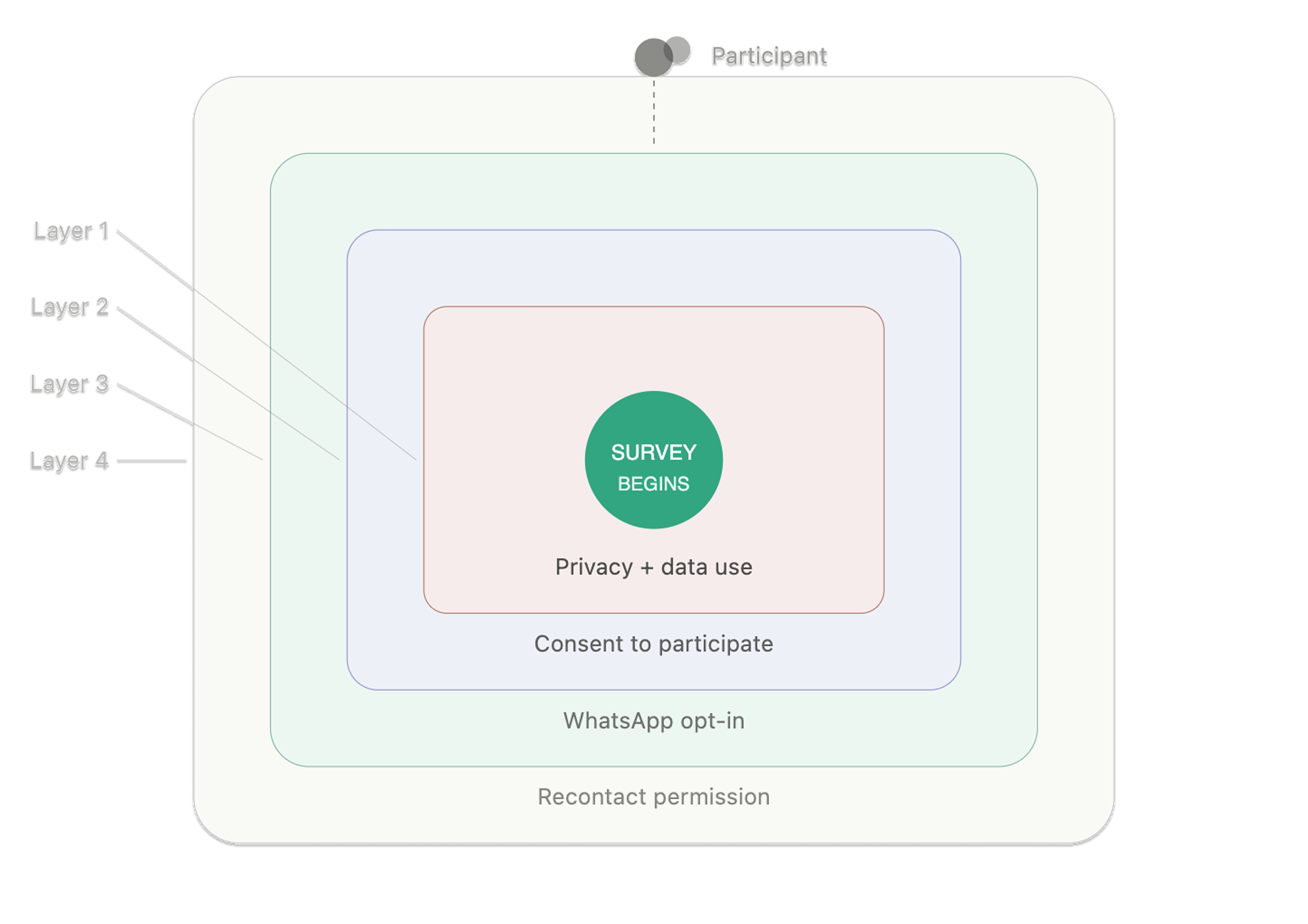
Opt In for WhatsApp Contact
Before you send anything, you need permission to even be in their inbox. A user must explicitly opt in to receive messages from you on WhatsApp. This is a strict requirement from WhatsApp itself. This consent is usually gathered on a signup form or website where a person agrees to be contacted for research. This single step filters for an engaged audience and ensures you comply with platform rules.
Consent to Participate
Once contact is made, the next step is getting consent for the specific study. This is where you clearly state what the research is about, how long it will take, and what they’ll need to do. The participant must give a clear affirmative action, like replying “YES,” to confirm they want to proceed. Under frameworks like GDPR, this informed consent must be freely given and documented.
Privacy and Data Use Acknowledgment
People are rightly concerned about their data. A crucial part of your pre-survey questions involves explaining how you’ll handle their information. You need to tell them:
- What data you are collecting.
- Why you are collecting it.
- How it will be stored and protected.
- That their responses will be kept confidential or anonymized.
A 2021 Cisco survey found that 86% of consumers care deeply about data privacy. By addressing this upfront, you build immense trust. Platforms like Yazi help you stay compliant with regulations like GDPR and South Africa’s POPIA by offering regional data storage options in the EU or South Africa. See Yazi’s Data Security Executive Summary for details.
Recontact Permission
What if you want to invite them to a follow up study? You need to ask for permission. At the end of the survey, a simple question like, “May we contact you for future research opportunities?” allows you to build a valuable panel of willing participants. If you need help sourcing participants, explore the Yazi Audience. Those who say yes can be contacted again, while those who say no are respected and left alone.
Getting to Know Your Participant: Verification and Demographics
Once you have permission to talk, you need to confirm you’re talking to the right person. These pre-survey questions are all about ensuring your sample is accurate.
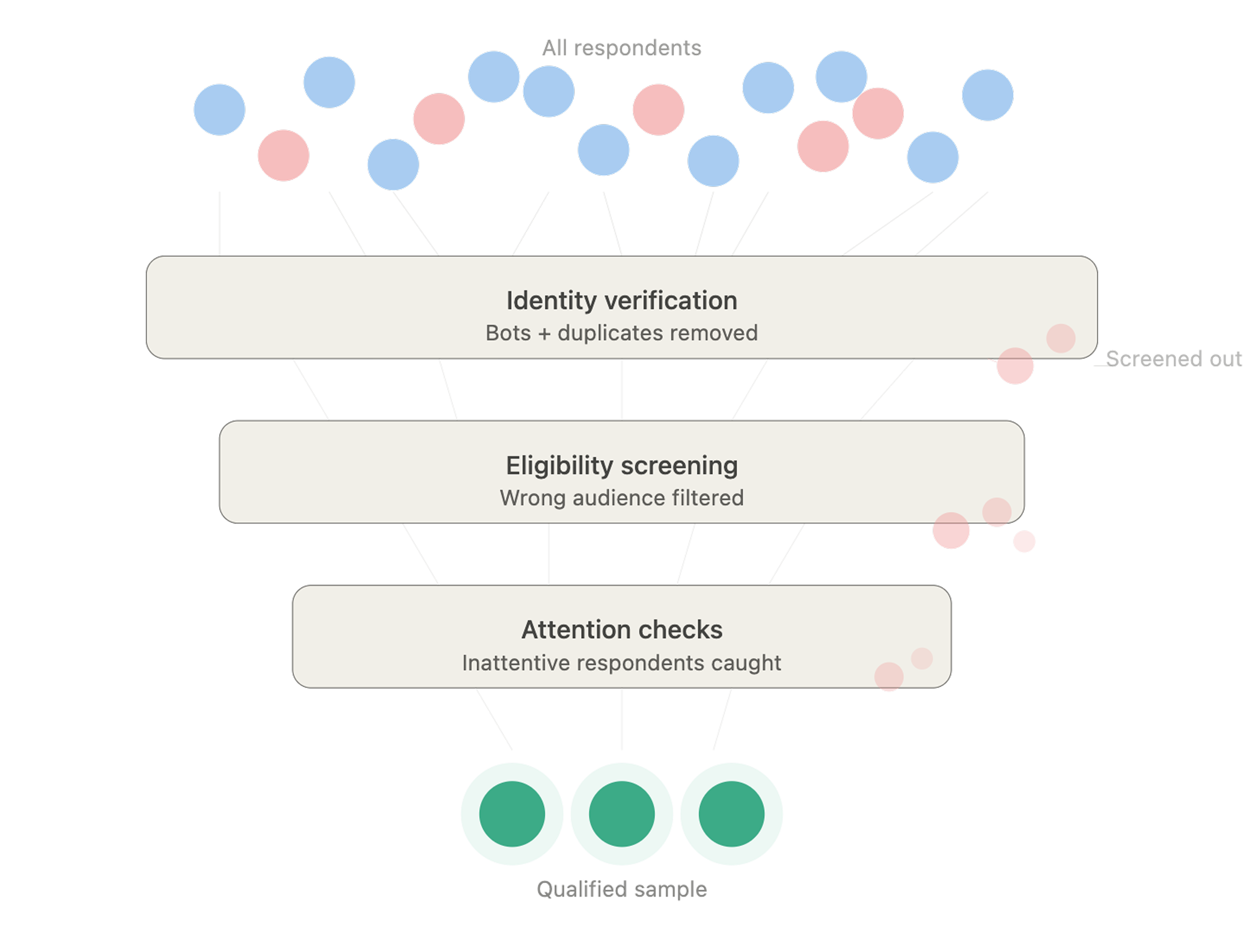
Identity Verification
Survey fraud is a real problem. Research has found that in some public opinion surveys, as many as 26% of responses in developing nations could be fraudulent. Identity verification helps prevent one person from taking a survey multiple times or bots from polluting your data. On WhatsApp, this is easier since an account is tied to a phone number. You can add another layer by asking them to confirm a piece of information they provided during signup, like their year of birth.
Confirming the Intended Participant
In many emerging markets, it’s common for a single phone to be shared among family members. A Pew Research study found that in some countries, up to 32% of adults don’t own their own phone and rely on a shared one. Your introductory message should include a simple check: “Hi, is this [Participant Name]?” This ensures the 50 year old father isn’t answering questions meant for his 16 year old daughter.
Demographic Questions
Questions about age, gender, location, or income are essential for understanding who is responding. This data allows you to segment your results and ensure your sample is representative. To make people more comfortable, it’s often best practice to:
- Place these questions at the end of the survey.
- Explain why you need the information (e.g., “to help us analyze the results fairly”).
- Always provide a “Prefer not to say” option.
Setting Expectations: The Onboarding Flow
A smooth onboarding flow makes participants feel comfortable and prepared. This part of the process uses conversational prompts to set clear expectations.
The Introductory Message
Your first impression matters. The introductory message is your handshake with the participant. It should be concise and clearly state:
- Who is contacting them (your organization’s name).
- Why you are messaging them (the purpose of the study).
- What is expected (e.g., “a 5 minute survey”).
- What’s in it for them (the incentive).
This message must be sent as a pre-approved WhatsApp template, a process that platforms like Yazi manage to ensure compliance and deliverability (see how it works).
Automated Bot Disclosure
If an AI or chatbot is conducting the interview, you need to say so - for example, when using Yazi’s AI Interviewer. Transparency is key. California’s Bot Disclosure Law, for example, legally requires this. A simple opening like, “Hi, I’m an automated research assistant,” sets the right expectations and builds trust. People generally prefer knowing they’re talking to a bot.
Incentive Acceptance
If you’re offering a reward (like cash, gift cards, or popular mobile airtime), you must be clear about what it is, how much it is, and when they will receive it. This prevents misunderstandings and confirms that the participant is okay with the arrangement. For example, “Upon completion, you will receive 50 ZAR in airtime. Please reply YES to confirm you understand.”
Confirming the Right to Skip or Stop
Participation must be voluntary from start to finish. You must inform participants that they can skip any question they are uncomfortable with or stop the survey at any time without penalty. International ethics guidelines state that participants must be told they are free to withdraw at any time. Reminding them of this right empowers them and often leads to more honest, thoughtful responses.
Fine Tuning the Experience: Logistics and Personalization
Great research feels less like an interrogation and more like a conversation tailored to the participant. These logistical pre-survey questions help you personalize the experience.
Language Preference
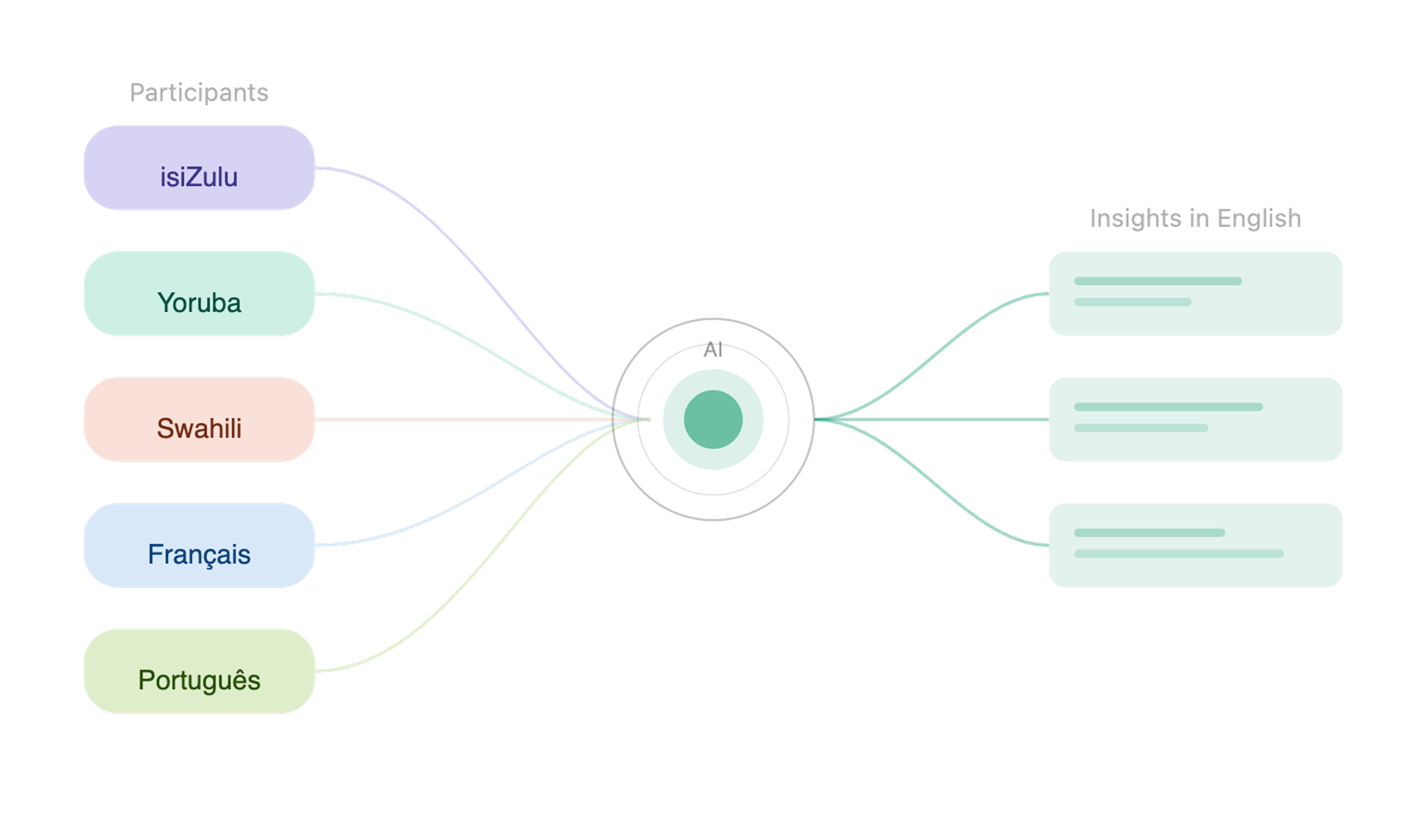
Africa alone has over 2,000 languages. Asking a participant their preferred language is a powerful sign of respect that dramatically improves data quality. If someone can respond in their native tongue, their answers will be richer and more nuanced. A study across 11 emerging economies found a median of 29% of mobile users face difficulties due to language barriers. Tools like the Yazi research platform solve this by supporting over 100 languages, allowing participants to respond in their own language while researchers see consolidated results in English.
Preferred Contact Time
Would your participant rather answer questions in the morning or after work? Asking for their preferred contact time can significantly boost response rates. For diary studies with daily prompts, this is especially critical. Sending a message at a time that fits their routine shows you respect their schedule and leads to better compliance.
Contact Information Update
In multi wave or longitudinal studies, people’s contact details can change. A quick check (“Is this still the best WhatsApp number to reach you?”) can prevent you from losing touch with a valuable participant down the line, ensuring you maintain high retention rates.
Ensuring Data Quality with Screening Pre-Survey Questions
Not everyone who wants to participate will be the right fit for your study. Eligibility screening is a filtering process that ensures you collect data only from your target audience.
These pre-survey questions are designed to qualify or disqualify participants based on specific criteria (e.g., “Do you own a car?” for a study on car maintenance). If a participant doesn’t qualify, they are politely thanked for their time and screened out, saving time for everyone. If you need inspiration, browse Yazi’s Survey Question Bank for common screeners and wording ideas. This is a fundamental type of pre-survey questions that guarantees your data comes from the right people.
Screeners can also include attention checks or red herring questions (“Have you ever traveled to Mars?”) to weed out inattentive or fraudulent respondents who are just clicking through to get an incentive.
The Final Check: Kicking Off the Survey
After all the groundwork is laid, there’s one last step before the real research begins.
Readiness to Proceed
This is a final, courteous checkpoint. A simple question like, “Are you ready to begin?” gives the participant a moment to get settled and confirm they are focused. It transitions them from the onboarding phase to the data collection phase, ensuring you have their full attention from the very first question. When they reply “Ready,” the main survey can begin.
By thoughtfully implementing this complete set of pre-survey questions, you create a research experience that is respectful, transparent, and efficient. This foundation of trust and clarity doesn’t just align with ethical best practices; it directly translates into higher engagement and superior data quality.
Ready to run research that participants love? Book a demo to see how Yazi’s platform automates these crucial steps, so you can focus on insights, not logistics.
Frequently Asked Questions about Pre-Survey Questions
What are pre-survey questions?
Pre-survey questions are a series of questions and confirmations asked before the main body of a survey begins. Their purpose is to handle essential administrative, ethical, and logistical tasks like obtaining consent, verifying a participant’s identity, screening for eligibility, and setting clear expectations for the study.
Why are these initial questions important for data quality?
They are critical for data quality because they act as a filter. Eligibility screening ensures you are only collecting data from your target audience. Identity verification and attention checks help remove fraudulent or inattentive respondents. Getting consent and ensuring privacy builds trust, which encourages more honest and thoughtful answers.
How many pre-survey questions should I ask?
Keep it as concise as possible. You should only ask what is absolutely necessary to qualify the respondent and ensure the research is ethical and compliant. A typical flow includes an intro, a consent check, and 2 to 5 screening questions. Too many upfront questions can lead to participant fatigue and drop off. As you plan, Yazi’s Sample Size Calculator can help set completion targets and margins of error.
What’s the difference between screening and demographic questions?
Screening questions are used to determine if someone is eligible to participate in the study at all. They are usually “yes” or “no” or multiple choice questions with a clear qualifying answer. Demographic questions (like age or location) are asked to understand the characteristics of the sample and are used for data analysis and segmentation. Sometimes a demographic question can also serve as a screener.
How can I best handle pre-survey questions on WhatsApp?
WhatsApp’s conversational format is perfect for a smooth onboarding flow. Use a chatbot or an automated platform to guide participants through the steps one message at a time. Keep messages short and the required responses simple (e.g., “Reply YES to continue”). Platforms like Yazi are designed specifically for this, managing everything from compliant introductory messages to complex screening logic within the WhatsApp chat.
Do I really need to ask for consent in my pre-survey questions?
Absolutely. Informed consent is a non negotiable ethical and often legal requirement for any research involving human participants. It ensures that people understand what they are agreeing to, that their participation is voluntary, and that they know their rights, including the right to withdraw at any time. It’s the foundation of respectful and trustworthy research.