%202.png)

6 Reasons Why Innovative Market Research Strategy Can Transform Your Business
Today's business world moves fast. Innovative market research is a necessity. Companies want to keep an edge. This method goes beyond old styles, using tech and data to find new insights about customers and markets. In this post, we list several key reasons to adopt innovative market research to change your business plan.
With deeper customer insights, innovative market research helps you build strong strategies. These approaches offer a unique advantage in the market. They guide your firm to take steps that align with what your customers want and need. This article will show you the value of innovative market research and give you the tools to make it part of your future business plans.

Understanding Innovative Market Research
Innovative market research involves modern ways to collect and study data about markets and consumers. Businesses collect data and gather data using various market research methods, such as surveys, interviews, and competitor analysis. This method is very important for businesses. It goes beyond older techniques, providing more dynamic insights. These insights deeply influence buying choices and the overall market.
One major benefit of innovative market research is its focus on buyer behavior. Many techniques like predictive analytics and big data analysis help companies understand what customers want, and its reason. Innovative market research helps companies understand both quantitative data (such as statistics and numbers) and qualitative data (such as brand perception and consumer attitudes). This understanding helps brands see trends before they happen, keeping them in front of competitors.
Using innovative technologies, enhances how market research works. For instance, artificial intelligence helps in analyzing large data sets fast. It finds patterns that manual methods would miss. Also, tools such as mobile analytics and online surveys give immediate insights straight from the target audience, allowing companies to collect primary data and consumer data. This leads to useful outcomes.
Today, businesses face complicated markets, making innovative market research critical. It helps companies grasp customer preferences and behaviors better. Additionally, it gives them the flexibility to adapt to changing market situations. Consumers today have much more power and awareness. Continuous research is key for any company wanting to grow and succeed. Using a mix of qualitative and quantitative research methods ensures a comprehensive understanding of the market.
Types of Research: Primary vs. Secondary Approaches
When you're diving into market research, there are basically two main roads you can take: primary research and secondary research. I've worked with both approaches (for different projects), and each has its sweet spot. Primary research is all about gathering fresh, original data straight from your potential customers or target audience. You're talking about methods like focus groups, interviews, and custom surveys—the works. The big win with primary research is that it gives you super specific and current insights that are tailored exactly to your unique business questions, helping you really get a handle on your market and make smart decisions.
Now, secondary research is a different beast—it leans on existing data that other organizations have already collected, like industry reports, academic publications, or government stats (basically, someone else did the heavy lifting). This approach is often way faster and more budget-friendly since you're leveraging data that's already been gathered and analyzed. But here's the catch: secondary research might not always hit your specific needs or reflect what's happening in the market right now.
Picking the right approach really comes down to your research goals, budget, and how much time you've got on your hands. From my experience, most businesses get the best bang for their buck by mixing both primary and secondary research—using existing data to shape their strategy and then filling in the gaps with targeted, original data collection. Getting a solid grasp on these two types of market research is pretty essential if you want to design an effective research process that actually delivers actionable insights and supports your business goals.
Research Methods for Modern Market Insights
If you want to really get what your target market's all about, you've gotta mix up your research methods to capture both the numbers and the stories behind them. Quantitative stuff—think online surveys and social media analytics—gives you hard data that you can crunch to spot patterns and trends in how people actually behave. These methods are perfect when you're looking to gather big-picture insights about what folks prefer, how they shop, and who they are demographically speaking.
Now, qualitative research methods (focus groups and those deep-dive interviews) are where things get interesting—they let you peek behind the curtain at what really drives your customers' motivations, attitudes, and experiences. This is where you uncover the "why" behind people's choices, and honestly, that's the stuff that numbers just can't tell you. Focus groups, for example, get people talking openly and can reveal emerging trends or needs that you didn't even know existed in your audience.
I'm a big fan of observational research too—it's like being a detective, monitoring online conversations, social media buzz, and sales data to catch those shifts in how people behave and what they want. When you watch how customers actually interact with products and brands in real time (not just what they say they do), you'll spot opportunities for innovation and improvement that you might've missed otherwise.
Here's the thing: when you combine all these research methods, you're building a complete picture of your market that actually makes sense. This lets you make smart decisions about your marketing strategies, product development, and how you engage with customers. This multi-method approach ensures you're catching valuable insights from every possible angle—and that's what drives real business growth and gives you that competitive edge you're after.
Research Tools and Techniques Powering Innovation
I've been working with market research for a while now, and honestly, the tools we have today are pretty incredible compared to what folks were dealing with just a few years ago. Take Google Analytics, for example—this thing gives you deep insights into website traffic, user behavior, and conversion rates that'll blow your mind (once you figure out how to navigate all those dashboards). I've also been using social media listening tools to monitor conversations and track brand sentiment across platforms like Twitter, Facebook, and Instagram, and let me tell you, it's fascinating to see what people are actually saying about brands when they think nobody's listening.
The survey software and data visualization platforms I've played around with have completely streamlined how I collect and analyze both quantitative and qualitative data—makes it super simple to spot patterns and communicate findings to clients who don't want to dig through spreadsheets all day. A/B testing has become my go-to technique for experimenting with different marketing strategies (because who doesn't love real-world results over guesswork?), and competitor analysis tools have been game-changers for benchmarking performance and staying ahead of industry trends.
Here's the thing that gets me excited about all this: by leveraging these innovative research tools and techniques, I can extract actionable insights from massive volumes of data, respond quickly when the market shifts, and develop marketing strategies that actually drive results. Staying up to date with the latest research methodologies has kept my business agile and competitive—and trust me, being ready to capitalize on new opportunities is everything in this space.
Benefits of Innovative Market Research
Innovative market research provides businesses with various benefits, improving decision-making and strategic planning. Market research efforts, such as competitive benchmarking and sentiment analysis, support understanding brand performance, consumer preferences, and market positioning by analyzing social metrics and industry data. By using new methods and technologies, companies can discover insights often missed by traditional ways.
One key benefit of innovative market research is access to real-time data. This quick access enables businesses to quickly switch positions when market shifts occur. Companies using mobile surveys and online focus groups receive feedback almost instantly, reducing data collection time.
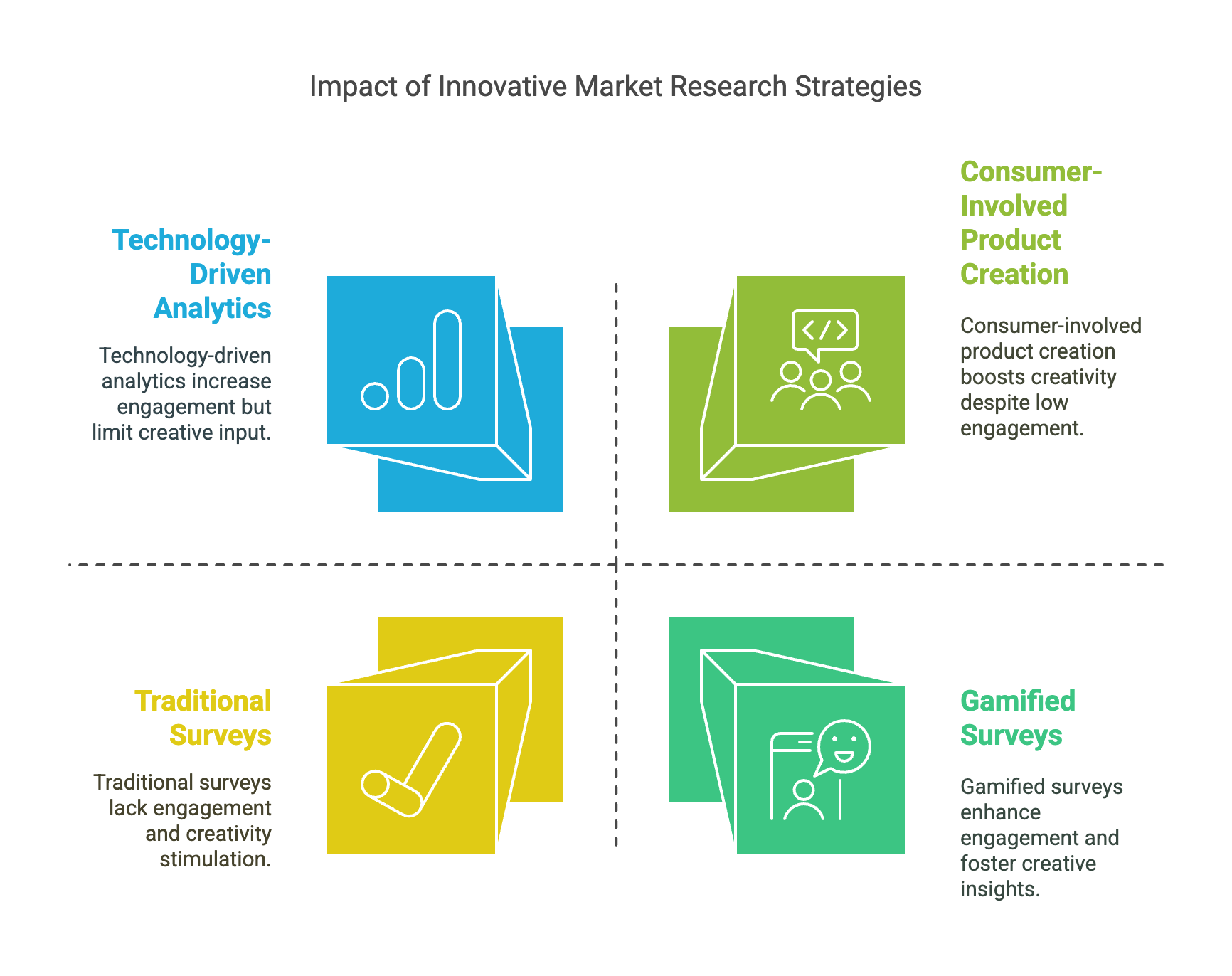
Additionally, innovative market research uses advanced analytics and data visualization tools, which help companies understand customer behavior better. These tools allow for precise audience segmentation, focusing on specific demographics. Research shows 67% of consumers prefer interacting with brands tailoring their offerings.
Cost-saving is another important aspect of innovative market research. Digital platforms help companies to cut research costs significantly. For instance, online surveys may cost half as much as in-person interviews while still providing useful insights. Collecting your own data can be more cost-effective and tailored to your business needs, ensuring the insights are directly relevant. This cost reduction helps firms invest in product development and marketing instead.
Increased customer engagement results from interactive research methods as well. Techniques like gamified surveys capture interest and boost participation. Reports indicate a 40% uptick in engagement from such interactive methods, which leads to higher quality data and more representative samples. Insights from innovative market research can be used to optimize marketing campaigns and improve the effectiveness of each marketing campaign, ensuring better targeting and higher ROI.
Furthermore, innovative market research encourages creativity within firms. When companies use unconventional research strategies, they might find surprising insights. For instance, firms involving customers in product creation experienced a 30% rise in successful launches compared to others not using consumer feedback. Innovative research methods, such as social listening and focus groups, can also help generate new product ideas based on consumer trends and preferences.
In conclusion, innovative market research brings significant benefits, equipping companies with essential tools for data-driven decisions and optimizing market strategies. These benefits enhance insight quality and build a strong base for future growth and creativity.
As we move forward, understanding the role of technology in market research is vital. Technology can magnify the benefits and drive transformation in business strategies.
Leveraging Technology and Market Research Methods in Innovative Market Research
Innovative market research is changing how businesses understand their customers. This revolution is mainly because of the use of cutting-edge technologies. Companies now enhance their data collection methods for gaining deep insights into consumer behaviors and preferences.
A notable method is using mobile technologies for outreach and collecting feedback. Platforms like Yazi tap into WhatsApp, enabling fast communication with customers. This method increases response rates while gathering real-time qualitative feedback, allowing firms to engage users in a personal way. Additionally, monitoring online conversations across social media platforms and forums provides valuable real-time consumer insights, helping businesses track sentiment and emerging trends.
The use of artificial intelligence and advanced analytics is reshaping innovative market research too. AI processes huge amounts of data swiftly. It uncovers patterns and trends not seen by traditional methods. For example, organizations can utilize AI-driven surveys adapting questions based on earlier answers. This approach leads to more insightful feedback. These tools also support competitive analysis by helping businesses benchmark against competitors, identify strengths and weaknesses, and better understand the competitive landscape.
Furthermore, analytics tools improve segmentation of audiences. By studying demographic data along with consumer behavior, businesses can tailor strategies better. The application of predictive analytics can spot market trends, giving firms a chance to stay ahead and make smart decisions.
Innovative technologies boost data collection and shape a complete ecosystem of insights. This setup streamlines decision-making. The outcome is an upgraded market research process informing companies of their current demands and preparing for future needs. Market researchers leverage these tools to enhance the effectiveness and depth of the qualitative research tools market research process, combining their expertise with advanced technology for optimal results.
As businesses adopt technology trends, their capability to shift market research from reactive to proactive rises significantly. Such advancements increase effectiveness in strategic initiatives. They also promote growth and flexibility in a fast-changing market environment.
Analyzing and Interpreting Data for Strategic Decisions
Here's the thing about market research—the real magic happens when you take all that raw data and actually figure out what it's telling you about your business. I've seen too many folks just collect information and call it a day, but that's like buying ingredients and never cooking the meal. You've got to dig into the analysis and interpretation to spot the patterns and trends that show you what's really going on with your target audience.
When you start using data visualization tools and dive into statistical analysis, that's when complex market research data begins to make sense. I'm always blown away by how emerging trends and growth opportunities just pop out when you approach the data right. Companies that really get this can fine-tune their marketing strategies, build products that actually solve customer problems, and gain that competitive edge that keeps them ahead of the pack.
The best part? Once you start applying these insights to your business strategy, you're making decisions based on actual data instead of just gut feelings. Market research helps you stay ahead of the curve by giving you a clearer picture of your target market, what your competitors are up to, and where your industry is heading. This proactive approach means you can adapt quickly when things change, jump on new opportunities, and build something that lasts in today's fast-moving business world.
Transformative Impact on Business Strategy for Competitive Advantage
Innovative market research is essential for shaping business strategy. It helps organizations gain insights useful for informed decisions. These insights align decisions with market demands. By employing advanced methods, companies can understand consumer behavior, trends, and competition much better. This insight boosts their ability to find and utilize new opportunities in the market. By conducting research, businesses can identify and enter a new market, ensuring they are targeting areas with the highest potential for growth.
For example, Netflix changed its business strategies using innovative market research data. They analyzed viewer preferences and viewing habits, allowing them to adapt content and improve user experiences. This flexibility let Netflix evolve from a DVD rental service to a top streaming platform, showcasing how market insights drive change.
Additionally, firms that follow an agile framework are more ready to adjust strategy based on new research. Agility allows quick pivots. Conducting research is a continuous process that supports these strategic pivots and the development of an effective marketing strategy. These strategic shifts come from real-time data and not from older assumptions. This adaptability matters greatly in today’s market, where consumer preferences change fast. In fact, businesses focusing on market research are reportedly 60% more likely to spot and act on fresh opportunities.
In this light, innovative market research not only sets strategic direction but also builds a continuous improvement culture. Companies integrating market research into their main strategies gain a competitive edge. They can respond swiftly to market changes and engage customers more effectively. The feedback loop established by innovative market research keeps them relevant as they pursue their strategic goals, and supports expansion into new markets.
As these businesses look to put strategic insights into action, diving deeper into customer understanding is the following step. Customer insights lay the groundwork for refining strategies and aligning them with market needs.
Understanding Your Target Market Through Research
Today, every business must understand its customers. Innovative market research helps companies explore the demographics of their target audience. Consumer research plays a crucial role in helping businesses understand their target customers by gathering data through surveys, focus groups, and social media listening. Analyzing customer demographics enables the creation of products that align with user needs, leading to improved satisfaction and loyalty among clients.
Customer feedback is key for innovative solutions. Gathering and using feedback gives businesses valuable insights. Primary market research, such as interviews, field trials, and direct surveys, allows companies to collect original data and gain immediate insights from their customers. Research shows that 70% of companies focused on customer experience see revenue growth, highlighting the role of customer insights in driving business success.
Companies use various methods to obtain qualitative insights. Focus groups facilitate open discussions, helping understand consumer behavior well. Exploratory research, including open-ended interviews and literature reviews, is especially useful for uncovering new opportunities and understanding customer motivations at an early stage. Surveys designed to collect specific data on preferences can inform product and service creation. Also, observation methods allow firms to see how users interact with their offerings, giving context to their feedback.
As market trends change, grasping consumer behavior is vital. Engaging in innovative market research helps businesses adapt and respond to shifts. This leads to steady growth and lasting development. Our next section will discuss how innovative strategies can help businesses thrive in a changing market environment.
Adoption of Innovative Strategies for Growth
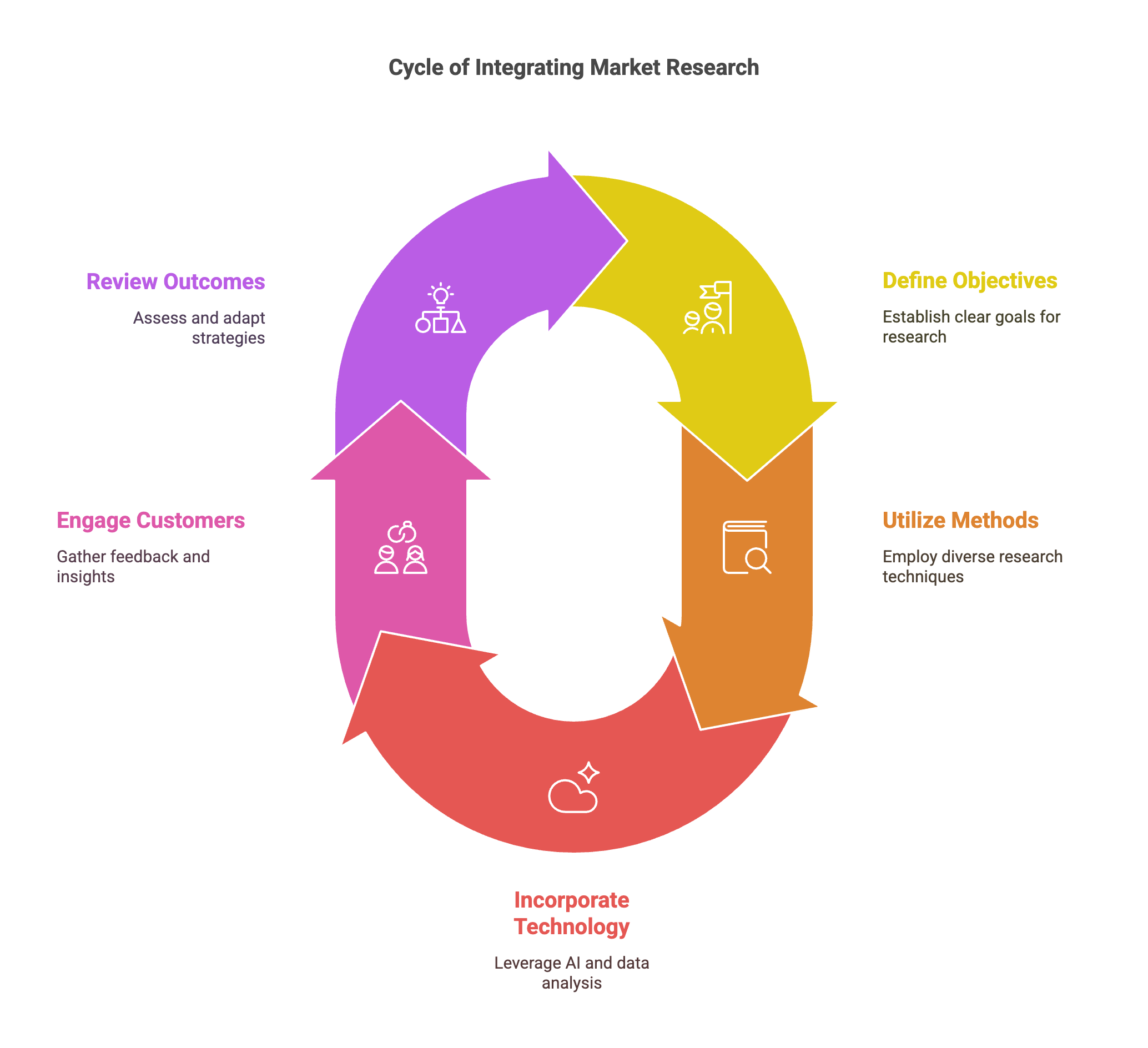
Integrating innovative market research into your business strategy is necessary. It helps ensure the organization can utilize key insights for growth. Here are a few steps to effectively incorporate innovative market research into your strategy:
- Define clear objectives: Identify specific goals that the innovative market research will aim to achieve. This includes understanding target demographics, market needs, and gaps that your products or services can fill.
- Utilize diverse research methods: Combining qualitative and quantitative methods aids in understanding market dynamics. Selecting the right research method—such as focus groups, surveys, interviews, observational research, or competitor analysis—should be based on your objectives and the type of insights needed. Techniques like online surveys, focus groups, and data analytics provide insights, enriching your decisions.
- Incorporate technology: Use tools like artificial intelligence and machine learning to quickly analyze large datasets. This helps identify trends that traditional methods might miss. For example, AI-driven sentiment analysis gauges customer perceptions in real-time.
- Engage with the customer base: It is important to interact with customers for feedback on products and services. Monitoring social media, conducting interviews, and running feedback sessions help respond agilely to changes in the market.
- Review outcomes and act: Regularly assess insights gained from market research. Adapt your strategic plans based on findings. Successful businesses analyze outcomes and adjust their plans to improve performance.
The outcomes of effective innovation strategies can be major. Companies using innovative market research often see growth in market share. Over 70% of organizations report significant gains in competitive advantage. Implementing these methods helps create a culture of innovation, helping them stay relevant and ahead of competitors.
Encouraging systematic approaches to use research findings is essential. A clearly defined framework ensures insights from innovative market research turn into actionable strategies. Organizations that prioritize this structured approach not only optimize resource use but also set up a continuous feedback loop. This loop fosters innovation, which is important for long-term success.
Conclusion
In closing, innovative market research is key for shaping strong business strategies. It helps in understanding market trends and using new technology. The insights gained from these methods are vital for success in a competitive market.
We've seen that using innovative market research techniques can boost decision-making and strategy. Integrating these insights helps firms meet customer needs, adapt to changes in the market, and gain an edge over competitors.
Act now and explore innovative market research approaches that can transform your strategies. Insights from this method can truly benefit your business. They can enhance growth and effectiveness in achieving goals.
Utilizing innovative market research not only benefits your strategy but creates new opportunities and strengthens customer bonds. Get started today and see the powerful effects of innovative market research for yourself!
About Yazi
Yazi offers an innovative market research platform that leverages WhatsApp to facilitate high-response surveys, diary studies, and in-depth interviews, enabling businesses to gather valuable insights efficiently.
In a world where understanding customer behavior is crucial, Yazi's unique approach enhances research engagement and accuracy, helping businesses connect with hard-to-reach demographics.
Discover how Yazi can transform your market research strategy by visiting askyazi.com today!
.png)

