

Updated October 2026. KoboToolbox is the free, nonprofit field data collection tool behind a huge share of humanitarian surveys. The main alternatives in 2026 are Yazi, SurveyCTO, ODK, CommCare, Survey Solutions, Ona, SurveyToGo, Magpi, TextIt and GeoPoll.
Most of them solve the same problem as Kobo, forms for enumerators who collect data offline, so the right choice comes down to security, case management, phone interviewing and cost. One of them, Yazi, works differently: respondents answer on their own phones, so you can run the survey without sending anyone into the field.
What KoboToolbox Does Well
KoboToolbox grew out of the Harvard Humanitarian Initiative and has been an independent nonprofit since 2019. More than 35,000 organisations use it, including UNHCR, OCHA, IOM, UNICEF, WFP and MSF, and 291 million surveys were collected on it in 2025. It supports XLSForm and a drag-and-drop builder, offline collection on Android and in web forms, background audio recording, and AI transcription and translation, with AI analysis of audio answers added in May 2026.
Nonprofits can use it free up to 5,000 submissions a month, which is the main reason it's everywhere.
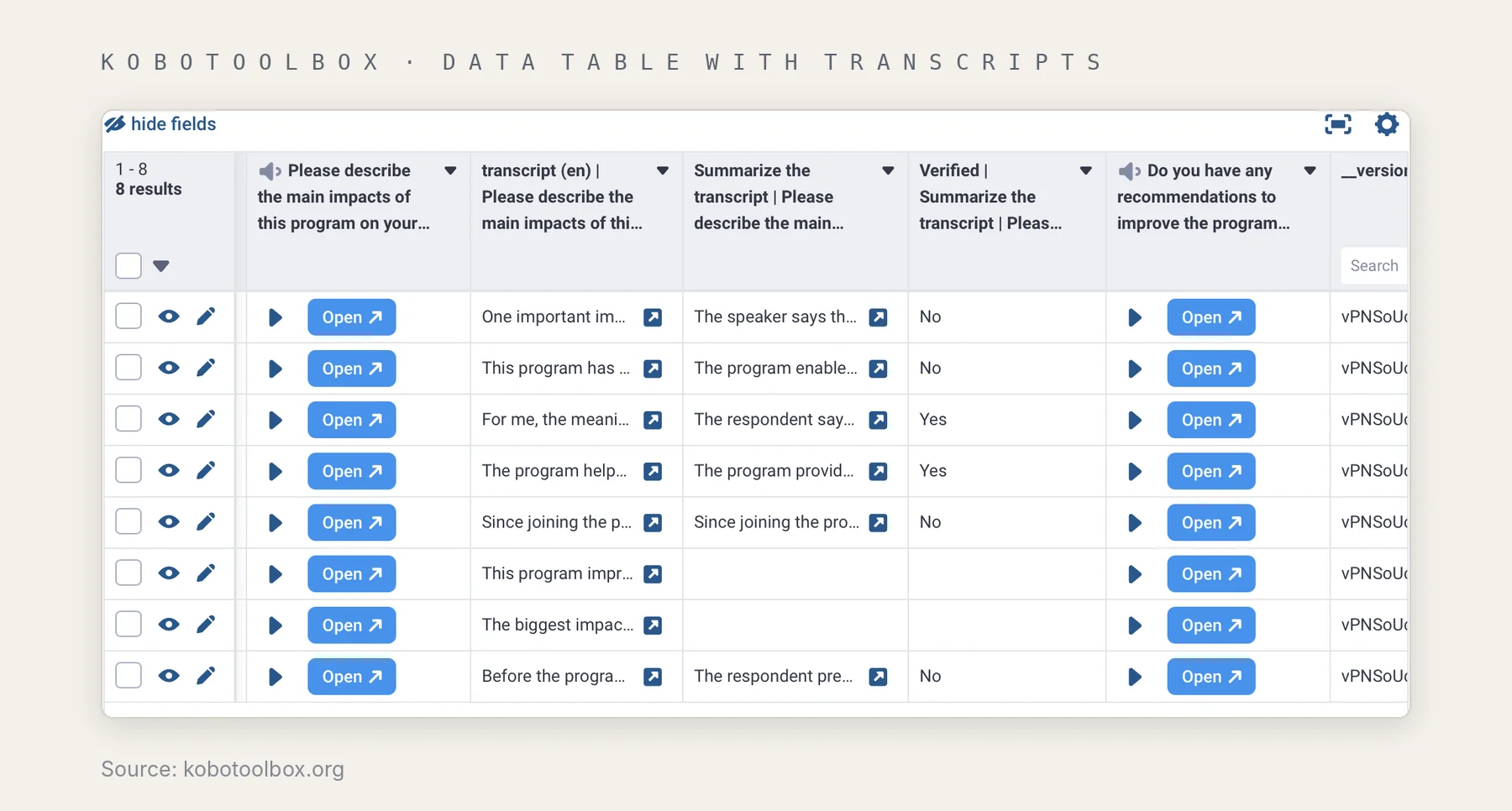
Why Teams Look for a KoboToolbox Alternative
- Paid plans and for-profit use. Since May 2024 Kobo has had tiered plans. Most nonprofits stay free, but higher volumes cost from $129 a month, and for-profit organisations, including research agencies working for NGOs, must pay.
- Security and compliance. Kobo doesn't name an ISO 27001 or SOC 2 certification, and its public servers aren't HIPAA compliant, which matters for health and protection data.
- Case management and phone interviews. Kobo links datasets but doesn't offer full case management, and there's no native phone interviewing.
- iOS. KoboCollect is Android only; iPhone users have to use web forms.
- Getting people in the field at all. Enumerators, devices and travel are expensive, and sometimes access is the problem. Some teams want respondents to answer remotely instead.
KoboToolbox Alternatives Compared
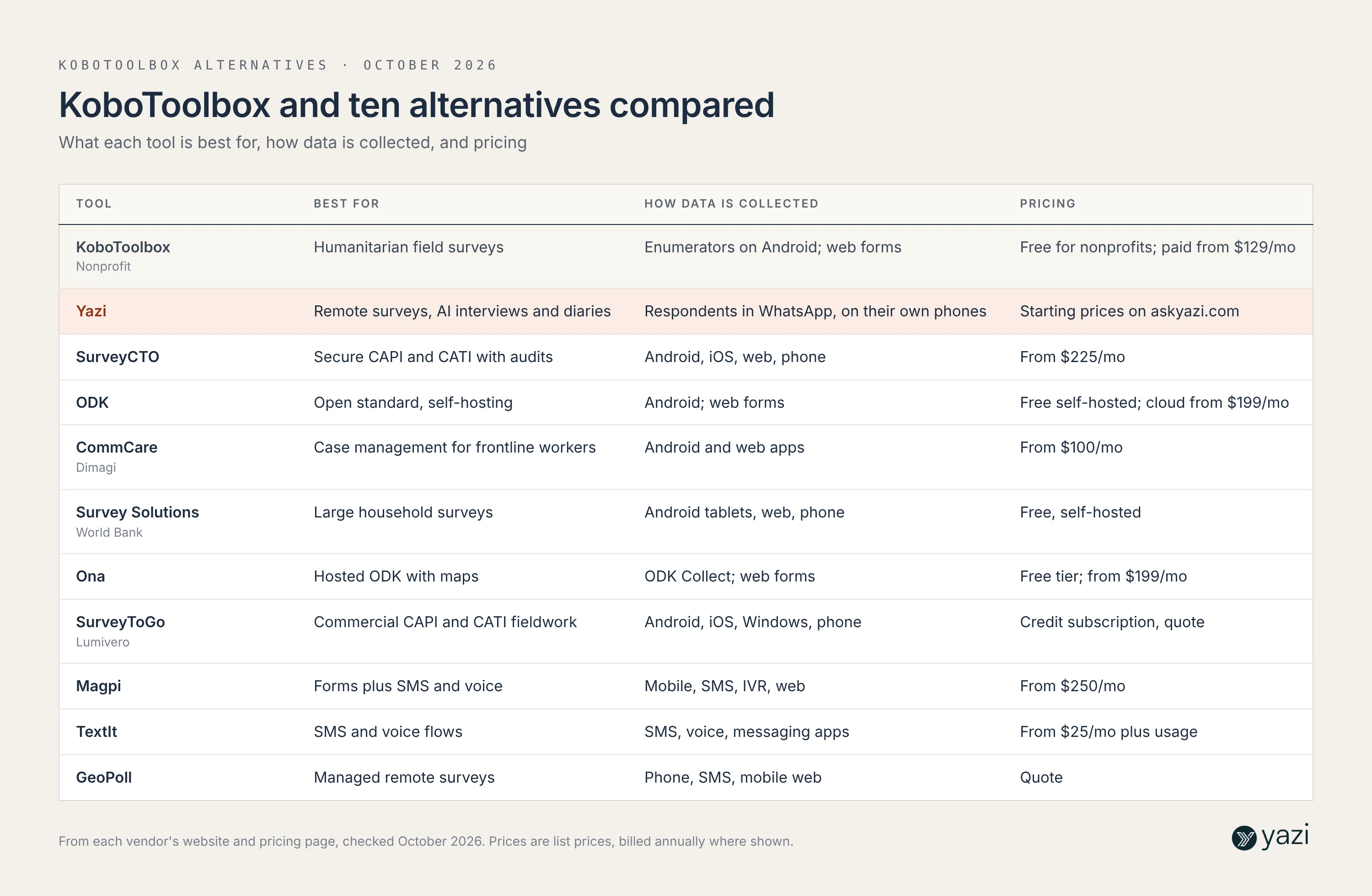
The table below shows what each tool is best for, how data is collected and how pricing works.
1. Yazi: Surveys, AI Interviews and Diaries Inside WhatsApp
KoboToolbox and most tools in this list put a form in an enumerator's hands. Yazi takes the enumerator out: the survey runs inside WhatsApp, on the respondent's own phone, and they answer in their own time by tapping a button, typing a reply or sending a voice note.
Remote, without enumerators: Respondents answer on their own phones, in the chat app they already use, so there are no tablets to buy, no field teams to deploy and no travel. Reminders arrive in the same thread, and answers sync as soon as the connection allows.
Qual and quant in one study: Surveys with skip logic, piping and randomisation, AI interviews, multi-day diaries and WhatsApp group discussions run from one platform, so a study can screen with a survey, go deep with an AI interview and follow people for days or weeks.
AI moderation with a human in the loop: The AI moderator follows your guide and follows up on open answers, including voice notes. A researcher can take over any conversation live and hand it back.
Languages and literacy: Yazi moderates natively in English, isiZulu, isiXhosa, Afrikaans, Setswana, Sesotho, Swahili, French, Portuguese and others, with AI translation across 100+ languages. Respondents can answer by voice note, which helps where literacy is low.
Panel and reach: A 1.8M+ panel with reach in 25+ countries, or your own beneficiary or customer list. Studies hold a 90% completion rate.
Reporting: Answers are grouped into themes as they arrive, with an AI-written summary you can edit and export to PDF or PowerPoint, cross-tabs, transcripts and highlight reels cut from respondents' own voice notes and videos.
Quality and compliance: Automated checks flag inconsistent answers and responses that look AI-generated. Yazi is POPIA, GDPR and CCPA compliant, with research data hosted on AWS in the UK and Ireland.
Where it fits less well: Respondents need a phone with WhatsApp, so it isn't the right tool for households without one, for observations an enumerator has to make in person, or for long household rosters and measurements. Kobo, SurveyCTO or Survey Solutions fit those better, and some teams use Yazi alongside them for follow-up rounds.
Best for: Remote surveys, AI interviews and diaries with people who have a phone but whom you can't easily visit; beneficiary feedback and follow-ups; studies that mix quant and qual; and mobile-first audiences in Africa, Latin America, Asia and the Middle East. See also how to run a survey on WhatsApp.

2. SurveyCTO: Secure CAPI and CATI for Research Teams
SurveyCTO is made by Dobility, a for-profit company, and is used by research groups such as J-PAL, IPA and the World Bank. It's built for teams that need strong data security and quality control in the field.
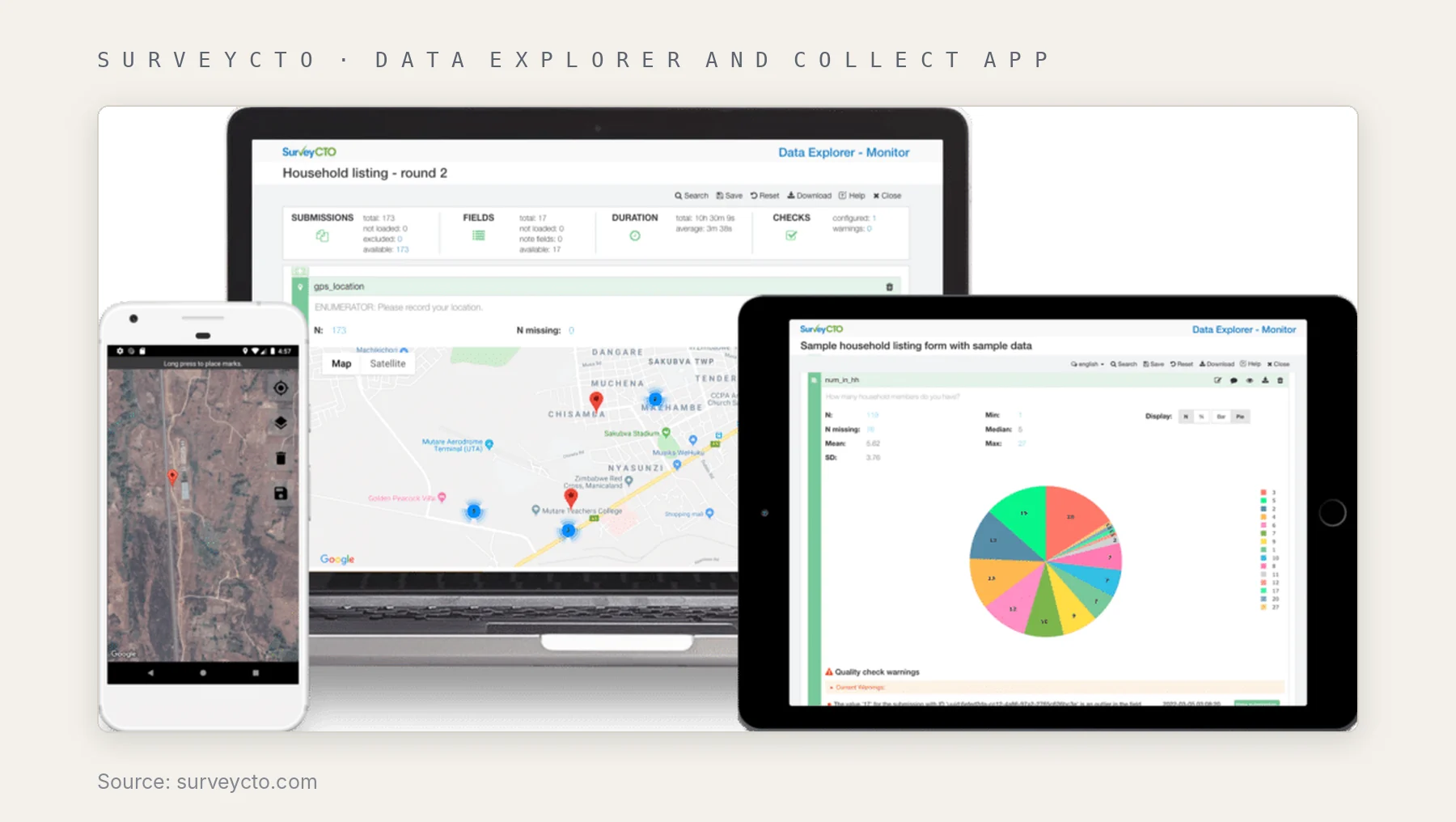
What it does: XLSForm and an online designer, offline collection on Android and iOS, web forms, case management, a phone interviewing plug-in, and audio and text audits for checking enumerators. AI help in the form designer arrived in January 2026, an MCP server in June and AI transcription and translation in October 2026.
Pricing: From $225 a month billed annually (Basic, 5,000 submissions), up to $630 for Advanced, with unlimited users and devices. A free Community plan allows 200 submissions a month for testing.
Worth knowing: It holds SOC 2 Type 2 and added HIPAA compliance in March 2026, with public-key encryption on every plan. Reviewers mention the cost and the learning curve.
Best for: Research organisations running large, sensitive surveys with enumerators who need audits and case management.
3. ODK: The Open-Source Standard Behind Many Field Tools
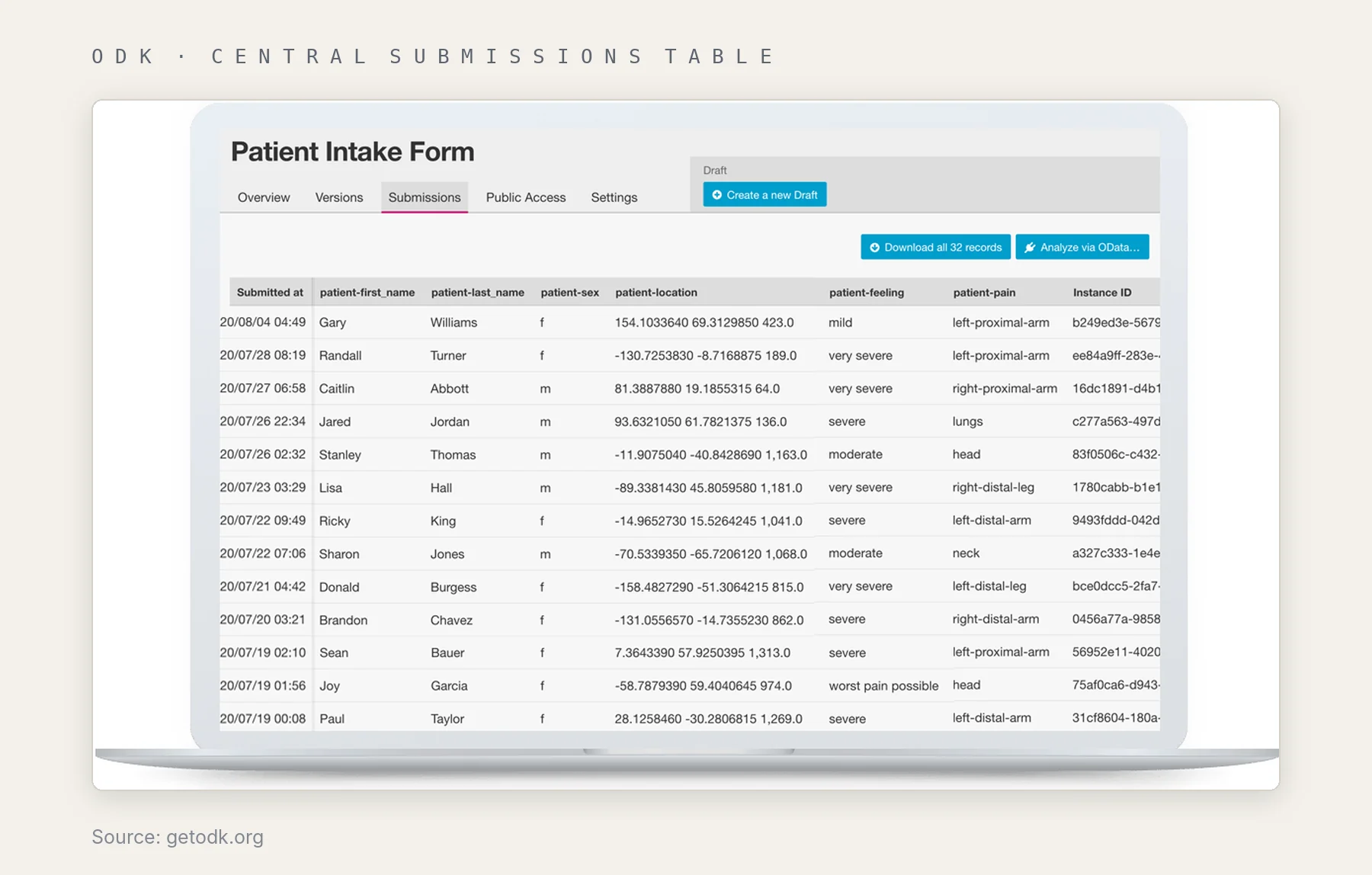
ODK is the open-source project whose form standard many of the tools here build on. Get ODK Inc. sells ODK Cloud, a hosted version of its ODK Central server, and you can also host Central yourself for free.
What it does: XLSForm forms, offline collection in the ODK Collect Android app and in web forms, and Entities for offline case management. The May 2026 release of Central added branded login pages and file uploads in web forms.
Pricing: ODK Cloud starts at $199 a month for one project and 10,000 submissions, and Professional is $499 a month. Self-hosting is free.
Worth knowing: There's no iOS app, no built-in analysis and no AI features. Reviewers love the ease of use and support, but say XLSForm takes learning. It's rated 4.9 on G2 from 100+ reviews.
Best for: Teams who want an open standard, full control over hosting, or the lowest cost at scale.
4. CommCare: Case Management for Frontline Programmes
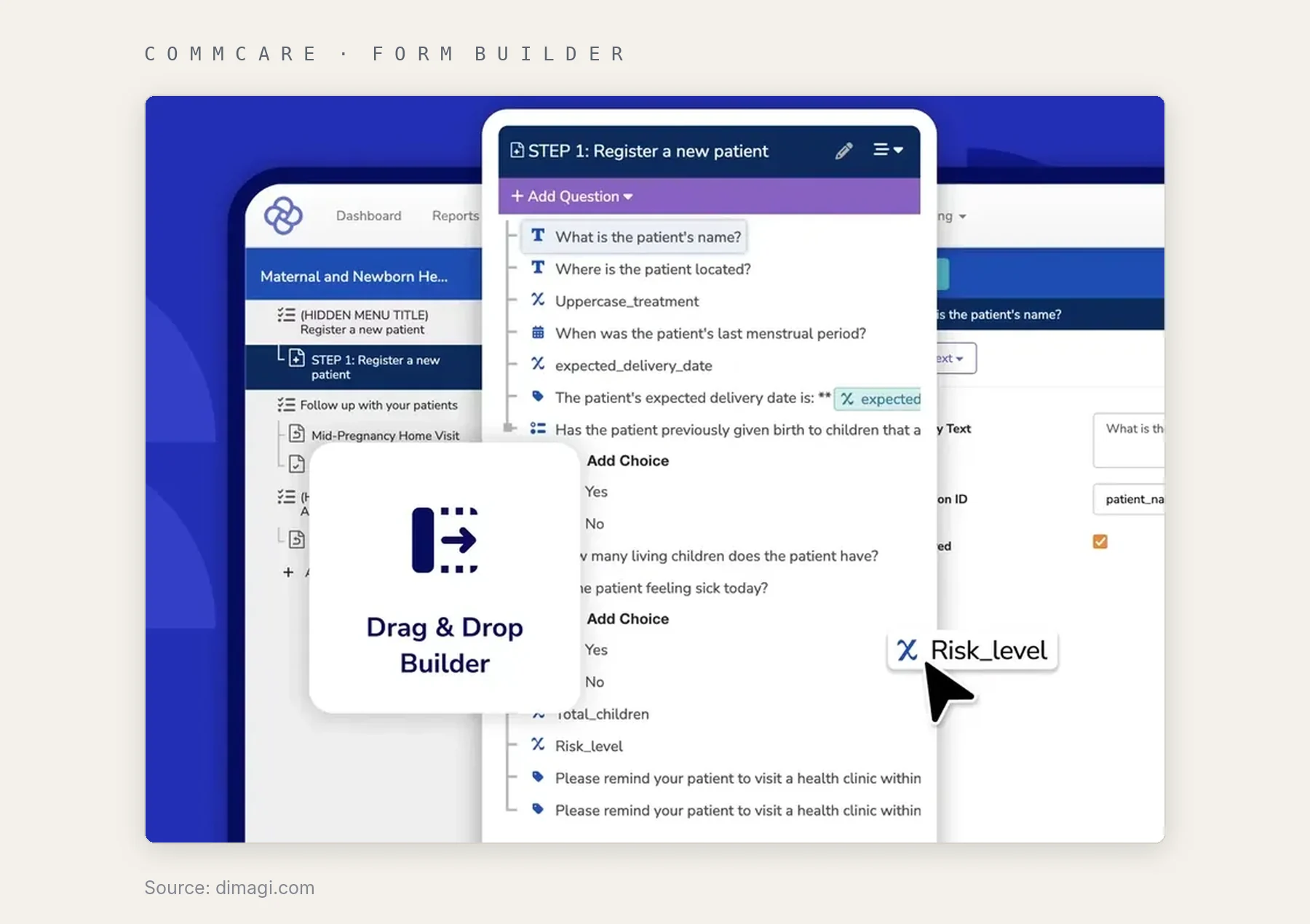
CommCare is made by Dimagi, a B Corp founded at MIT in 2002. It says more than a million frontline workers use it in 3,000+ projects across 130+ countries, mostly in health and social programmes.
What it does: Apps for community health workers and field staff that follow the same people over time: registration, visits, referrals and follow-ups, offline on Android or in web apps, with two-way SMS on higher plans.
Pricing: A free plan for testing with five users, then Standard at $100 a month (50 users), Pro at $500 and Advanced at $1,000, billed annually.
Worth knowing: It's the strongest tool here for case management, and holds SOC 2 Type 2, with HIPAA and GDPR support and hosting in the US, EU or India. It's more of an app platform than a survey tool.
Best for: Health and social programmes that track individuals or households over months.
5. Survey Solutions: The World Bank's Free CAPI Platform
Survey Solutions is free software from the World Bank, used by national statistics offices and large household surveys. The latest release, in September 2026, added audio audit playback.
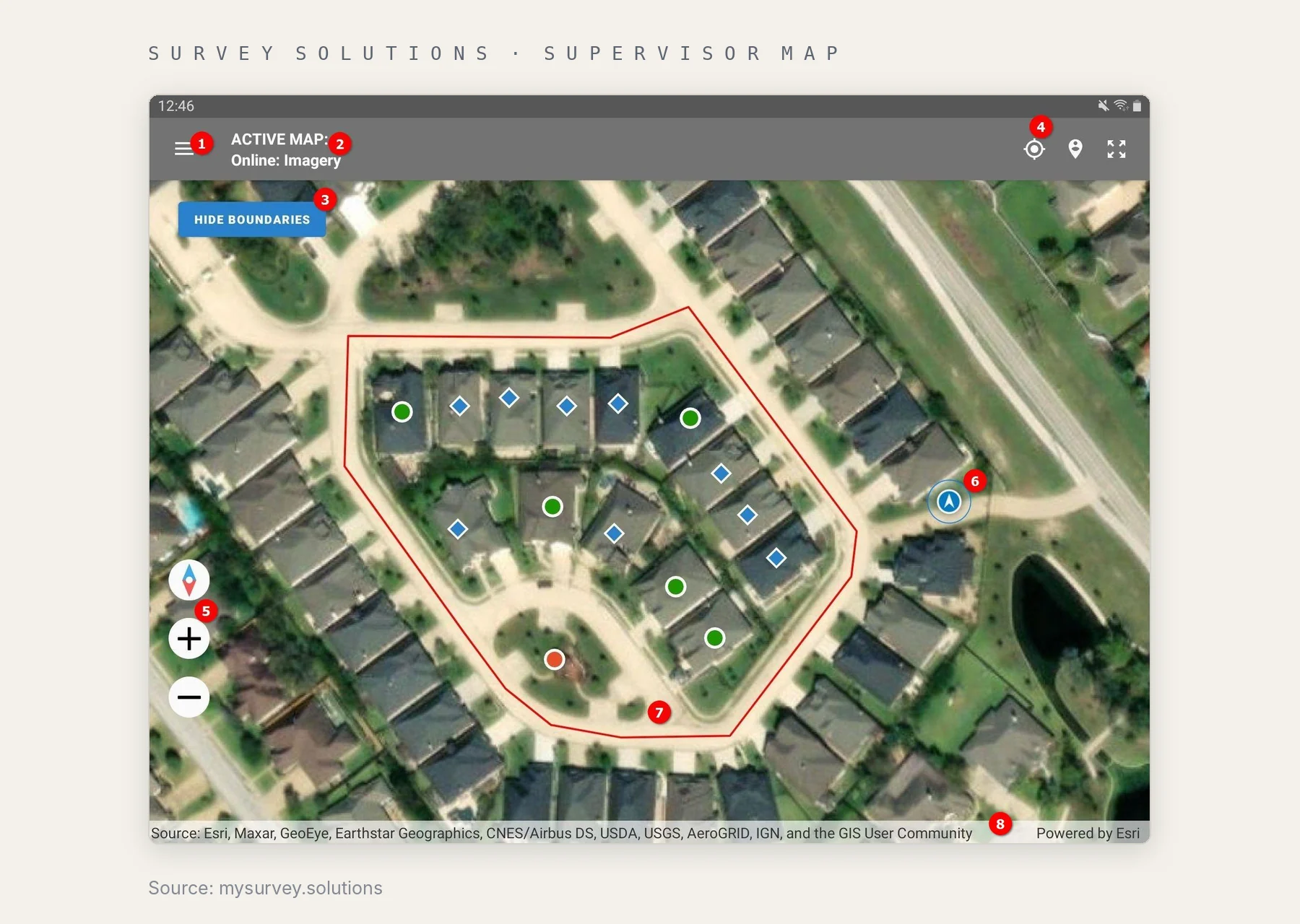
What it does: Face-to-face interviewing on Android tablets, web surveys and phone interviewing, with assignments, geofencing, a supervisor map and strong validation for long, complex questionnaires.
Pricing: Free. You host the server yourself on your own or cloud infrastructure; the World Bank only hosts servers for its own projects.
Worth knowing: It uses its own designer rather than XLSForm, and reviewers mention sync issues and a learning curve. It's rated 4.6 on Capterra.
Best for: Statistics offices and large household or census-style surveys with an IT team to host it.
6. Ona: Hosted ODK with Maps and Dashboards
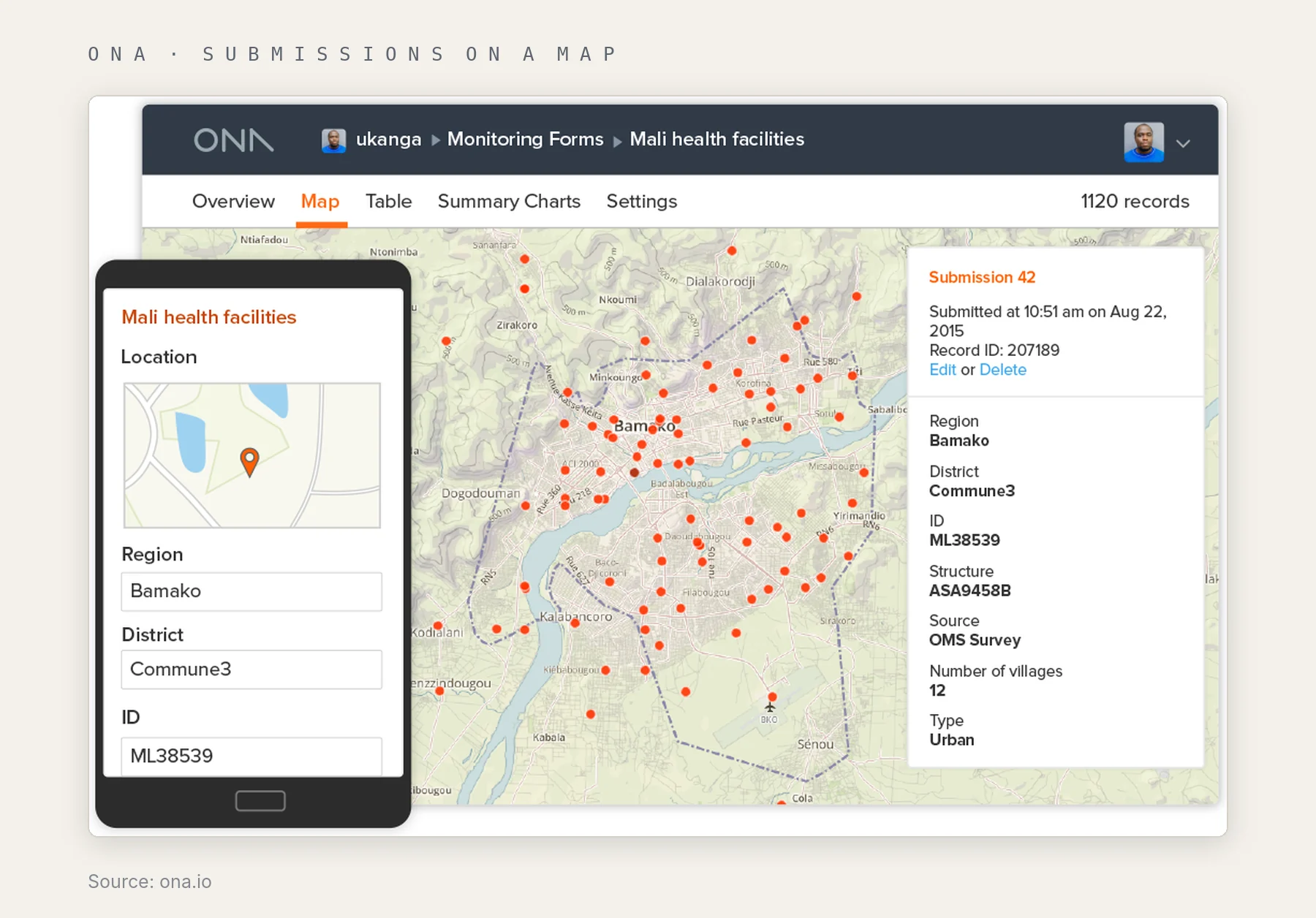
Ona, from Ona Systems in Kenya and the US, offers hosted data collection built on ODK, with maps and charts for submissions. WFP's MoDa platform has used it.
Pricing: A free plan with 500 submissions a month, then $199 a month (15,000 submissions) and $299 a month (30,000 submissions).
Worth knowing: Its public updates have slowed, with the latest blog post in November 2024, so check the roadmap before committing.
Best for: Teams that want hosted ODK with mapping, especially in East Africa.
7. SurveyToGo: CAPI and CATI for Market Research Fieldwork
SurveyToGo, originally from Dooblo and now sold by Lumivero (the owner of NVivo), is built for commercial fieldwork agencies and names Nielsen, Ipsos and Kantar among its users.
What it does: Face-to-face, phone and web interviewing on Android, iOS and Windows, offline, with quotas, GPS and geofencing, silent audio or video recording and a quality control console.
Pricing: A 12-month subscription with interview credits rather than per-user fees; prices aren't published.
Best for: Market research agencies running large CAPI and CATI fieldwork with quotas.
8. Magpi: Mobile Forms with SMS and Voice
Magpi is a mobile data collection tool that adds SMS, voice (IVR), web forms and chat-style surveys on its Pro plan.
Pricing: Basic is $250 a month for 500 uploads and 15 collectors, Pro is $500 a month and Enterprise $1,000, with a free 60-day trial.
Best for: Programmes that want offline forms and SMS or voice surveys from one tool.
9. TextIt and RapidPro: Messaging Flows for SMS and Voice
TextIt, run by Nyaruka, lets you build automated conversation flows over SMS, voice and messaging apps. RapidPro is its open-source sibling, created with UNICEF in 2014 and used by UNICEF country offices around the world.
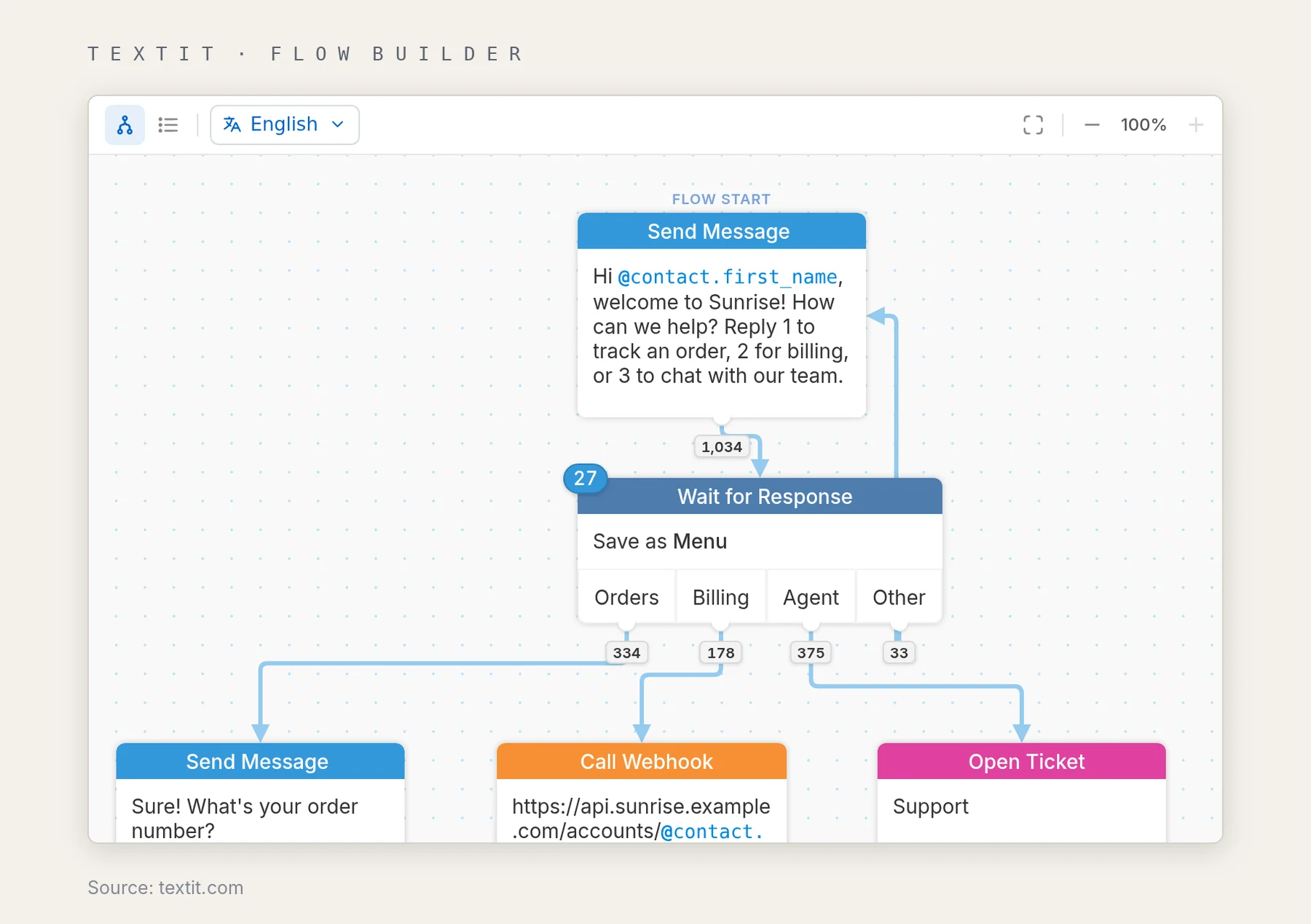
What it does: Visual flow builder, contact management, scheduled messages, and AI that classifies open replies, translates flows and flags risk language.
Pricing: TextIt starts at $25 a month plus $0.01 per extra contact, with a free trial. RapidPro is free to self-host.
Worth knowing: It's a messaging platform rather than a research tool, so sampling, quotas, incentives and analysis are up to you.
Best for: Programmes that already message beneficiaries and want simple surveys inside those flows.
10. GeoPoll: Remote Surveys Across Emerging Markets
GeoPoll, the trading name of Denver-based Mobile Accord with its main operations in Kenya, runs remote surveys in emerging markets by phone (CATI), SMS, mobile web, app and face to face, through 65 call centres and 10,000+ interviewers. Clients include the Gates Foundation, Coca-Cola, Unilever and Ipsos.
AI: Senselytic AI analysis of open-ended answers (November 2025), AI-moderated voice surveys, and AI checks on call transcripts.
Worth knowing: It's mostly a managed service priced on a quote. Its own reach figures vary between pages (80+ or 120+ countries, a 5M profiled panel).
Best for: NGOs, media and brands that want a managed CATI or SMS survey across several emerging markets.

How to Choose
Start with how the data has to be collected, then with who pays and how sensitive it is.
- Free and proven for humanitarian work: stay on KoboToolbox, or move to ODK if you want to self-host.
- Sensitive data, audits and case management: SurveyCTO.
- Following the same households or patients over months: CommCare.
- National household surveys with an IT team: Survey Solutions.
- Commercial fieldwork with quotas and phone interviewing: SurveyToGo or SurveyCTO.
- SMS or voice surveys with beneficiaries: TextIt, Magpi or engageSPARK.
- Managed remote surveys across several countries: GeoPoll.
- Respondents answering on their own phones, with AI follow-ups and no field team: Yazi.
For a closer look at the two most common choices, see SurveyCTO vs KoboToolbox.
Frequently Asked Questions
Is KoboToolbox still free?
Yes for most nonprofits. The Community plan is free for nonprofits, government agencies, UN agencies and nonprofit education up to 5,000 submissions a month. Paid plans start at $129 a month billed annually for nonprofits, and for-profit organisations can't use it for free.
What is the best alternative to KoboToolbox?
For secure enumerator surveys with audits, SurveyCTO. For an open standard you can self-host, ODK. For case management, CommCare. For large household surveys, Survey Solutions. For surveys respondents answer on their own phones in WhatsApp, with no field team, Yazi.
Does KoboToolbox work offline?
Yes. KoboCollect on Android and Kobo's web forms both work offline once the form has loaded, and submissions upload when there's a connection.
Does KoboToolbox have an iPhone app?
No. KoboCollect is Android only. iPhone users can collect data through Kobo's web forms, which also work offline. SurveyCTO and SurveyToGo have iOS apps.
Can you run a KoboToolbox survey without enumerators?
You can share a web form link for people to fill in themselves, but most Kobo surveys are run by enumerators. If you want respondents to answer remotely in a chat they already use, with reminders and AI follow-ups, Yazi is built for that.
Competitor details come from each vendor's website, pricing page, documentation, release notes and review listings, checked in October 2026. Products and prices change, so confirm current details with the vendor. Spotted something out of date? Email hello@askyazi.com.


